the map of neglect
the map of neglect
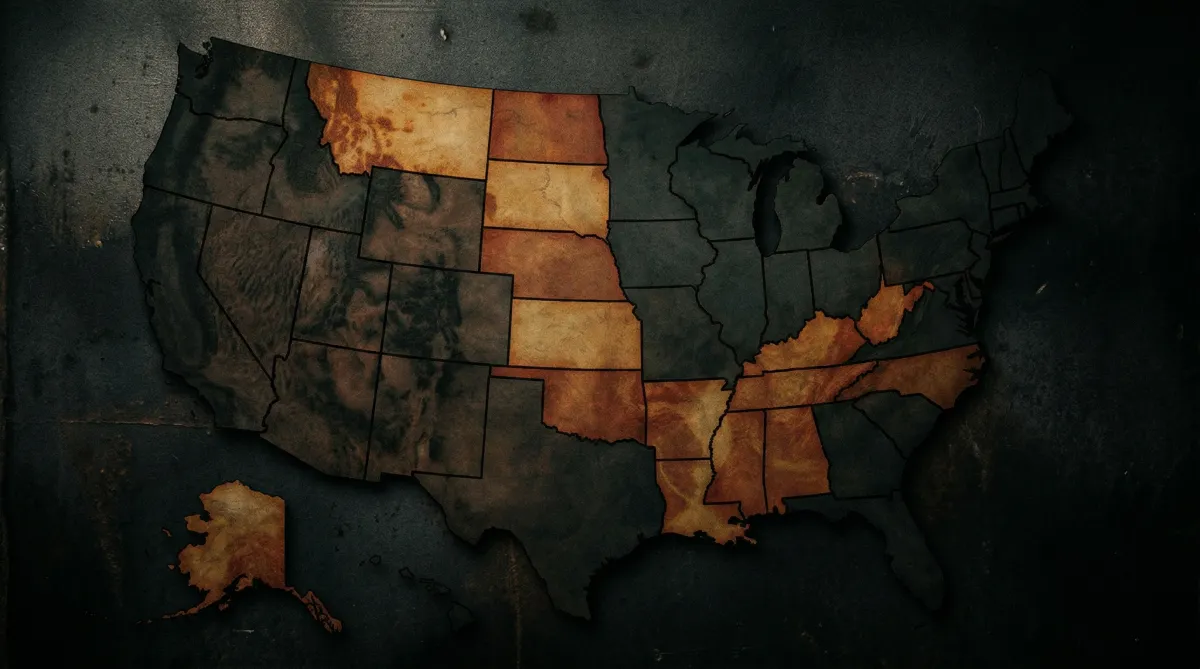
Montana will cover a female firefighter's breast cancer — but only if she's under 40 and has no genetic predispositions.
Read that again.
The median age of a breast cancer diagnosis in the United States is62. Only about 4% of all breast cancer cases are diagnosed in women under 40. Montana's law doesn't just fall short of covering the reality of this disease — it covers a statistical outlier and calls it a benefit.
That's not a coverage gap. That's a closed door with a welcome mat in front of it.
the law was written for someone else
Presumptive cancer laws exist in most states. Their purpose is to remove the burden of proof from a firefighter who develops cancer — if you served long enough, the disease is presumed to be work-related, and workers' compensation follows. It's a good idea. It has saved lives and families.
But the laws were written when firefighting meant one thing: men.
Women make up roughly9% of the fire servicetoday. The cancers that disproportionately affect them — breast cancer, ovarian cancer, cervical cancer, endometrial cancer — were an afterthought, if they were a thought at all. Many states' presumptive laws either exclude these cancers entirely, cap them with age restrictions that bear no relationship to how the disease actually presents, or attach genetic predisposition clauses that can be used to deny claims before the argument even starts.
The result is a legal landscape that, state by state, treats female firefighters as though their biology is a liability they brought to the job themselves.
the human cost, plainly stated
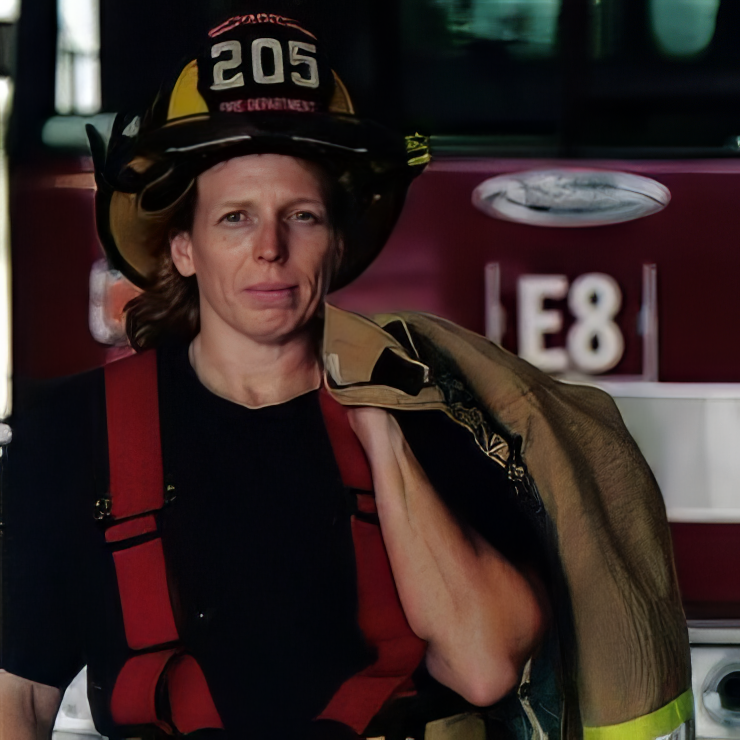
Malinda Baum joined the Richardson Fire Department on November 1, 1997. In December 2008, at 45 years old, she was diagnosed with breast cancer. She was terminated in August 2010. Workers' compensation was part of her story — and workers' compensation failed her.
She is the director ofBrotherhood, Rewritten.
The film also follows a lieutenant in Austin with 19 years of service. Stage 4 endometrial and ovarian cancer. Workers' comp denied. She is still fighting — for coverage, for recognition, for the basic acknowledgment that what she did for two decades has consequences for her body.
Same fires. Both got cancer. One survived. One is dying. Both need to be heard.
These are not isolated cases. They are the rule, not the exception — and the reason we know so little about how common this is comes down to a research problem that has been building for decades.
the data gap
The Fire Fighter Cancer Cohort Study(FFCCS) has been tracking firefighter cancer risk since 2016 — a long-term, multicenter study designed to enroll 10,000 firefighters and follow them for up to 30 years. Its work has confirmed what firefighters have known for a long time: occupational exposure to toxic chemicals, PFAS, and combustion byproducts alters DNA methylation, disrupts tumor-suppressive pathways, and accelerates biological aging at the cellular level.
But the FFCCS, like most firefighter health research before it, was built around a predominantly male cohort. The studies that could establish the statistical link between firefighting and female-specific cancers — the link that would make presumptive coverage legally defensible — are still catching up.
A study of women career firefighters in Florida, published through the FFCCS network, found a63% increase in overall cancer incidencecompared to the general population, with elevated rates of cervical and thyroid cancers. Research on the Health and Wellness of Women Firefighters found that female firefighters had a miscarriage rate 2.33 times higher than U.S. nurses. These are serious findings — but the body of evidence needed to change law is still being built.
And in the meantime, the legal system says: not enough data to presume. Claim denied.
The data gap is not an accident. It's a consequence of who was assumed to be the firefighter in the first place.
hb 1639: a beginning, not an answer
On June 20, 2025, Texas Governor Greg Abbott signedHB 1639into law. The bill directs the Texas Department of State Health Services, in collaboration with the Texas Commission on Fire Protection, to study the increased incidence of cancer in female firefighters — comparing cancer rates among female firefighters to those of the general female population, with specific focus on ovarian and breast cancer. Results are due September 1, 2026.
It is a study bill. It does not change presumptive coverage. It does not compensate anyone. It does not undo the denials that have already happened.
What it does is begin to build the evidentiary foundation that advocates, attorneys, and legislators have lacked for years. That matters. The bill's own authors noted explicitly thatthe lack of research into female-related cancers among female firefighters disqualifies these cancers from being presumed under the workers' compensation system. HB 1639 exists precisely because the data gap has been used as a weapon against the women it was supposed to protect.
The Texas State Association of Fire Fighters backed the bill. It passed the Senate 29-2. This is what political will looks like when it shows up — limited, incremental, and still meaningful.
But a study due in September 2026 does not help a lieutenant in Austin with Stage 4 cancer right now. It does not retroactively cover Malinda Baum. It does not change Montana's law, or the laws of every other state where women are running into the same wall.
what the film is for
Law moves slowly. Research moves slowly. Advocacy — the kind that makes legislators uncomfortable enough to act — requires a human face.
Brotherhood, Rewritten is that face. Two women. Two diagnoses. The full weight of a system that looked at what they did for twenty years and said: prove it.
Documentary film has always been one of the fastest routes from data to conscience. What the FFCCS measures in blood samples and DNA methylation, this film measures in the faces of women who ran into burning buildings and are now fighting to survive the aftermath.
The work to finish this film is ongoing. Fiscal sponsorship is provided by From the Heart Productions (IRS #95-444-5418), which means your donation is tax-deductible.
If you've read this far, you already understand what's at stake.
Sources:National Breast Cancer Foundation(median diagnosis age 62);Susan G. Komen(breast cancer under 40);IAFF Montana Presumptive Law;Montana Code Annotated §39-71-1401;Women in Fire(9% female fire service);Fire Fighter Cancer Cohort Study;FFCCS Protocol, NIH/PMC(63% cancer incidence increase);HB 1639 (Texas, 2025);Texas State Association of Fire Fighters.